
Rehabilitation of a firefighting water tank using mineral mortar
Project: enviaM, Grimma (Saxony)
Execution: Kanal-Türpe Döben GmbH & Co. KG in collaboration with Hermes Technologie
Initial Situation
Beneath an existing storage and maintenance hall belonging to envia Mitteldeutsche Energie AG in Grimma lies a reinforced concrete firefighting water tank. The building was constructed in 2000. The tank is used to store rainwater, which serves both for vehicle washing and as firefighting water.
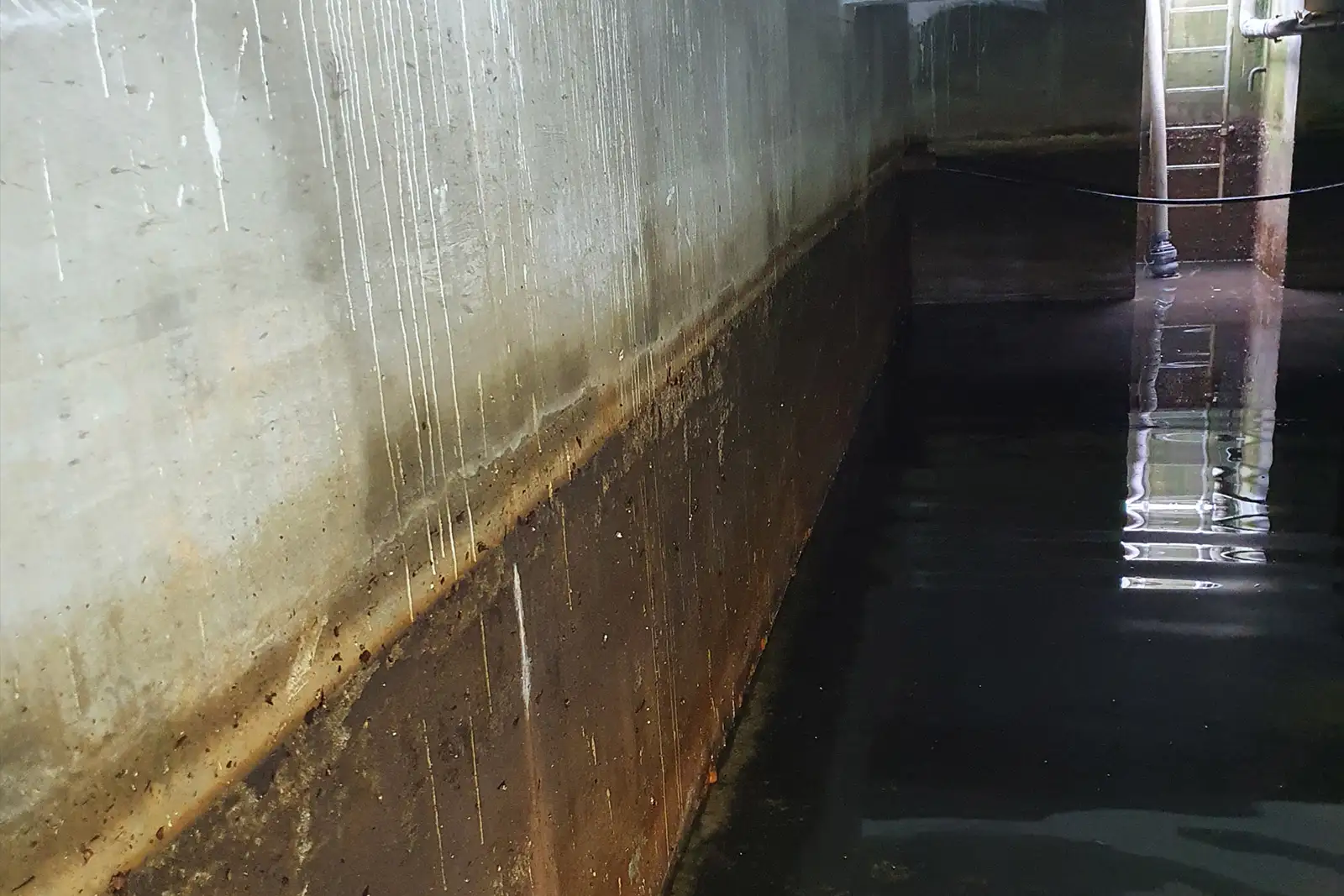
The water level typically sits at around 1.20 meters, with irregular water turnover resulting from weather-dependent inflow. Due to a low pH value—dropping to approximately 4.5 in some cases—and a lack of total hardness, rainwater is considered aggressive to concrete. Very soft water with a hardness of 0 can attack concrete surfaces over the long term.
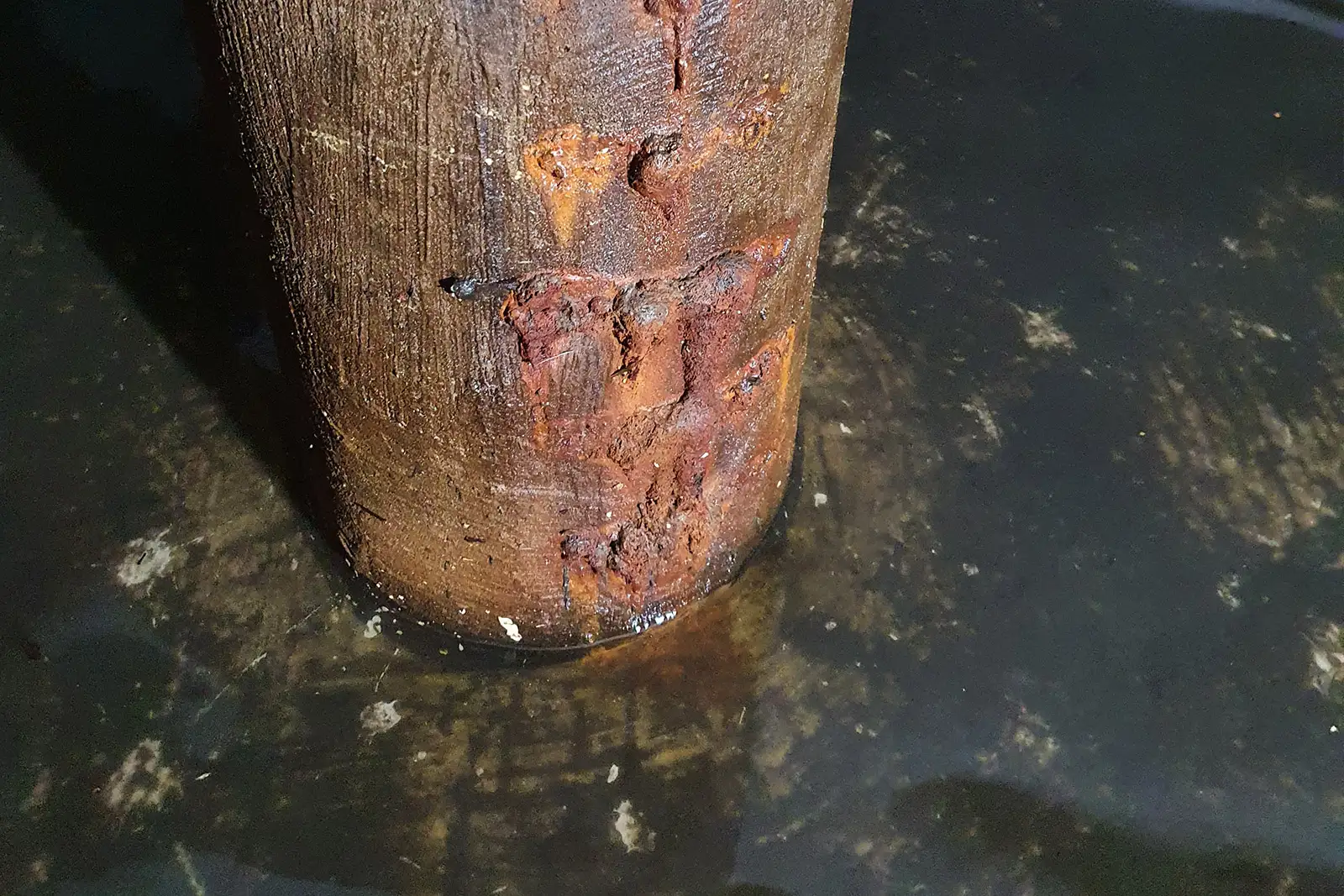
Following roughly 20 years of operation, an inspection revealed spalling and initial corrosion damage. In certain areas, the reinforcement was visibly exposed and corroded, caused in part by insufficient concrete cover. The total surface area requiring rehabilitation across the walls, floor, and columns amounted to approximately 480 square meters.
Structural and Design Framework Conditions
The firefighting water tank is located entirely beneath the hall. The overlying structure is supported by 16 round columns and surrounding walls. Before the start of the rehabilitation measures, the load-bearing capacity of the structural elements was verified.
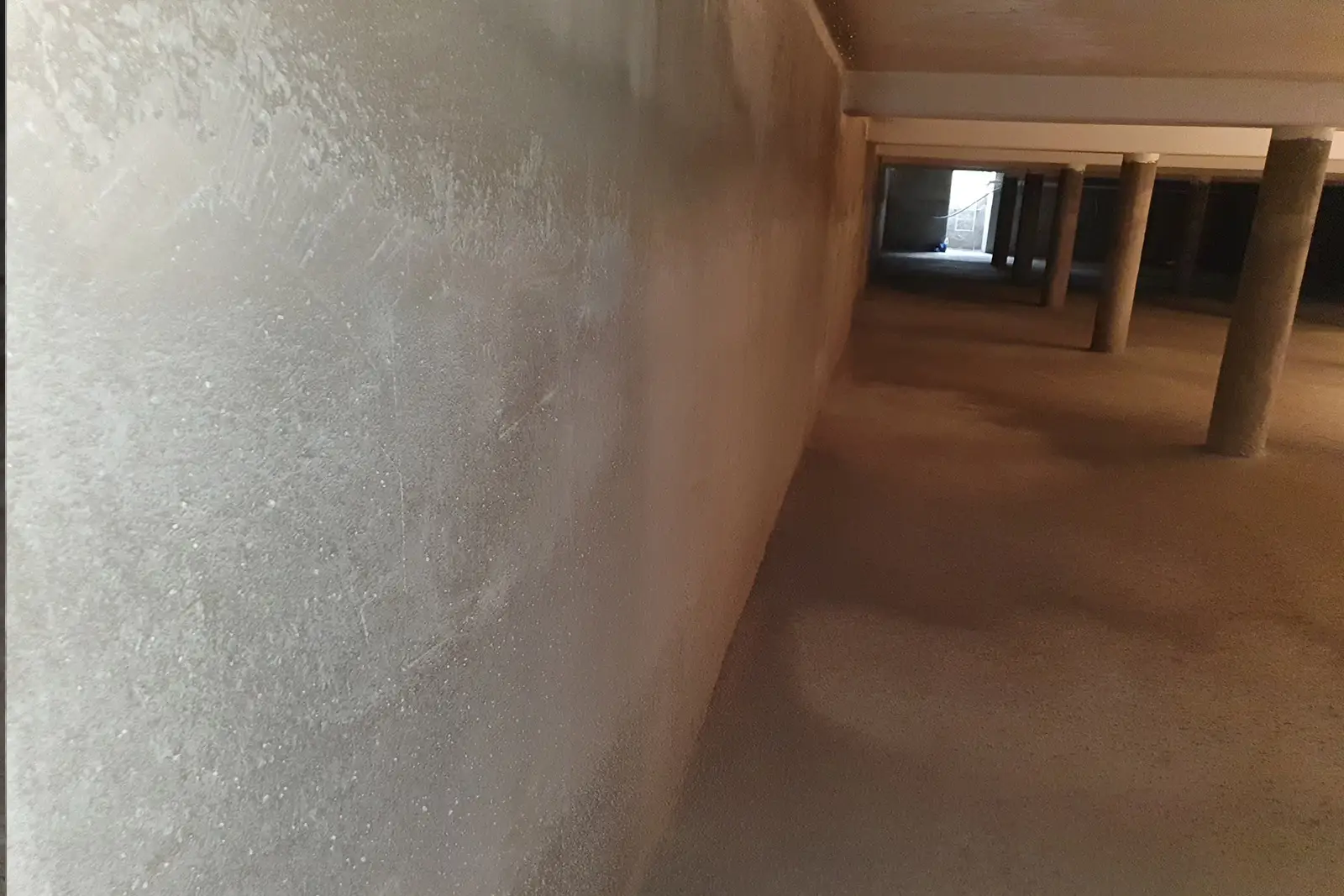
The objective of the rehabilitation was to permanently protect the exposed reinforcement and to provide the reinforced concrete structure in the water-wetted area with an additional 10-millimeter-thick mineral coating. This was intended to establish a new concrete cover as well as permanent corrosion protection.
Selection of the Rehabilitation Method
The Leipzig branch of Kanal-Türpe Döben GmbH & Co. KG was commissioned with the execution.
Originally, manual coating in accordance with DWA-M 143-17 would have been an option. However, due to the large surface area and limited accessibility inside the enclosed hall, this method would have required significantly more time.
Following a joint site inspection by Wolfgang Kolb (Master Craftsman RKI, Kanal-Türpe) and Til Ibrahiem (Technical Sales Consultant, Hermes Technologie), the wet spray method in accordance with DWA-M 143-17 was chosen as the more economical and higher-quality solution.
Technical Implementation – Wet Spray Method
In the wet spray method, the WW-ERGELIT dry mortar is mixed with water in a forced-action mixer to achieve the required consistency. In this project, a flow spread between 155 and 165 millimeters was selected. The required water-to-solids ratio was taken from the technical data sheet.
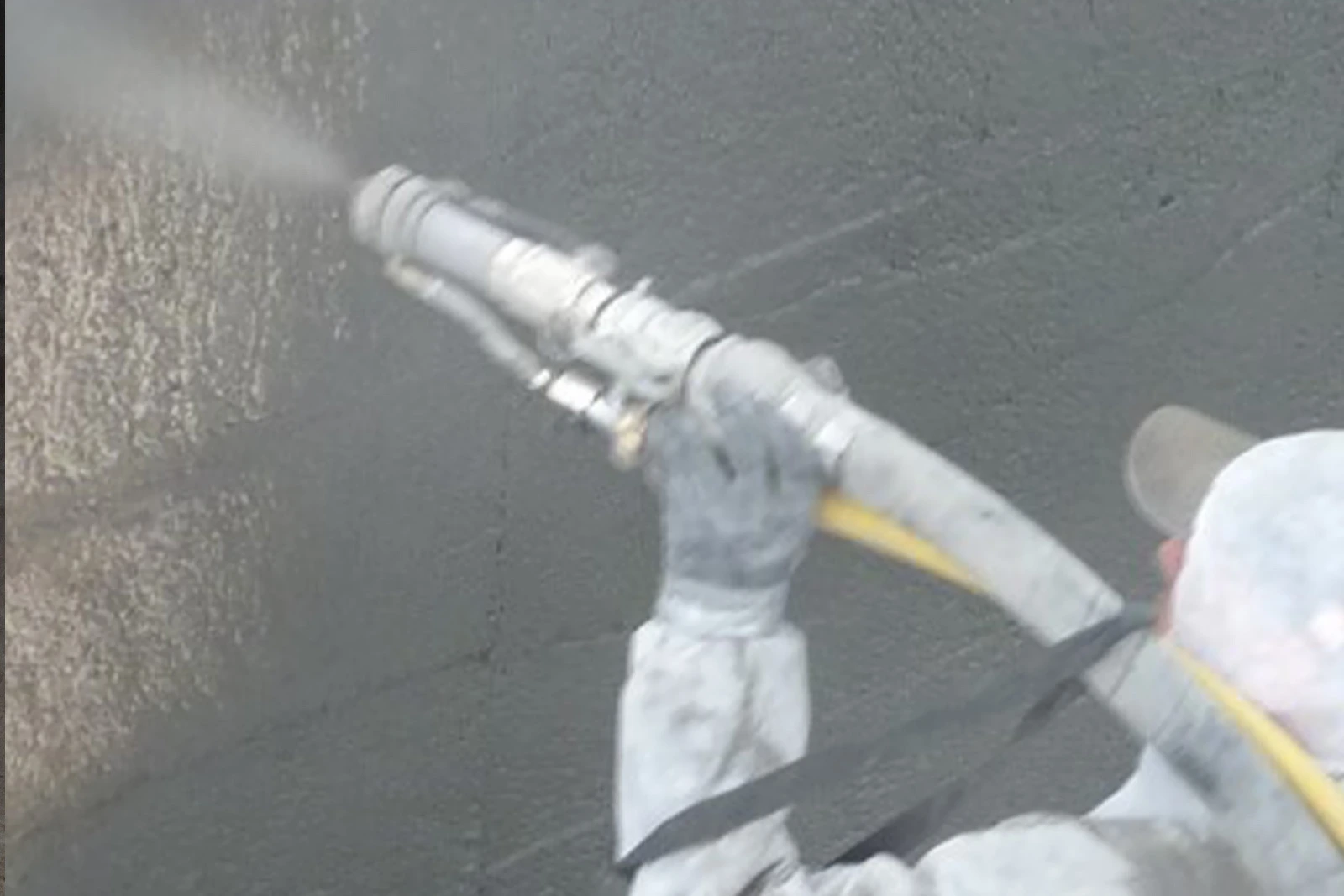
A screw pump conveyed the fresh mortar through a 30-meter-long DN 25 mortar hose to the wet spray nozzle using the dense-stream process. At the nozzle, the mortar was broken up using external air with an air volume of more than 1 cubic meter per minute and applied to the surface at high speed.
This technique achieves a very high degree of compaction. The fine distribution of the mortar particles significantly minimizes air voids compared to manual coating, considerably increasing the quality of the coating.
Approximately 15 liters of mortar were conveyed per minute. The nozzle operator worked in circular movements at a distance of around 20 centimeters from the surface. The experience of the machine operator and the nozzle operator was crucial for the uniform spray pattern. At least one employee held a BBE or SIVV certificate.
Materials Used
According to the tender specifications, WW coating mortars in accordance with DIN 19573 were used.
For the corrosion protection of the exposed reinforcement, ERGELIT-KS1 was applied manually. Due to the rapid early strength development, work could be continued immediately.
Surface coating was carried out using ERGELIT-KT40. Decisive factors for this choice were its good pumpability and longer processing time. Both products are certified as WW coating mortars in accordance with DIN 19573 and fulfill the requirements of exposure class XWW3 as well as static class B2.
Surface Preparation
Surface preparation was carried out using the dry abrasive blasting method with silicone-free slag sand. This process removed loose particles and roughened the surface to more than 1 to 2 millimeters in accordance with DWA-M 143-17.
Machine Technology and Organization
A KS-ASS rental unit featuring a forced-action mixer and screw pump from Hermes Technologie was deployed. The system was supplemented by an externally rented, oil-free compressor with an air output of 1,500 liters per minute.
Globally active Hermes technician Michael Kustner supported the team on-site with the setup and application of the equipment technology.
Two people worked inside the tank, while three additional employees handled material supply, the mixer, and the pump. A rotating personnel structure ensured an even workload distribution among the staff.
Execution and Quality Assurance
The 10-millimeter layer thickness was continuously checked using marked nails and a folding rule. The round columns were also coated with minimal rebound and high uniformity.
A break was taken for approximately every 2.5 tonnes of mortar or 120 square meters of surface area. Spraying took place for around five hours on each of two working days.
Cross-ventilation was maintained during the work, supplemented by electric fans. During breaks and after the end of the workday, ventilation was stopped to ensure optimal curing of the fresh mortar. The entry hatch was sealed immediately after work concluded.
Due to the early water exposure time of ERGELIT-KT40, the firefighting water tank could be put back into operation after just 24 hours. The project was completed two days ahead of schedule.
Conclusion: enviaM was extremely satisfied with the quality of the completed rehabilitation. The wet spray method in combination with ERGELIT mortars proved to be an economical and technically high-quality solution for large-scale coatings under confined conditions. Future projects of this type are also planned to be implemented with Kanal-Türpe using the wet spray method.


